
 English
 Portugues
 Pусский
 Français
 العربية
 Indonesia
 Melayu
 Tiếng Việt
 中文
中文 қазақ
қазақ עִברִית
 မြန်မာ
 ພາສາລາວ
 Filipino
 o'zbek
 Кыргызча
 тоҷикӣ
 ខ្មែរ
ខ្មែរ Türkmenler


Large-Scale Coastal Resort Water Treatment
A large-scale coastal resort water treatment system is designed to provide safe, reliable, and high-quality water for guests, staff, landscaping, recreational facilities, and support operations while addressing the challenges of a marine environment. Because coastal resorts are often located near seawater, exposed to salt spray, and subject to seasonal changes in occupancy, their water treatment systems must be robust, efficient, and adaptable.The process usually begins with a source water assessment. Depending on the location, raw water may come from municipal supply, groundwater, surface water, or desalinated seawater. In many coastal developments, seawater desalination plays a key role, especially where freshwater resources are limited. The initial treatment stage typically includes screening and pre-filtration to remove large particles, sand, algae, and debris. If seawater is used, pretreatment is especially important to protect downstream equipment from fouling and corrosion.Next, the water passes through advanced filtration systems. Multimedia filters, activated carbon filters, and ultrafiltration membranes are commonly used to reduce turbidity, organic matter, chlorine, and microscopic contaminants. In desalination systems, reverse osmosis is often the central process, removing dissolved salts and producing potable water suitable for drinking, cooking, bathing, and laundry. Because reverse osmosis membranes are sensitive, pretreatment and chemical dosing are carefully controlled to maintain system performance and extend membrane life.Disinfection is another critical step. Resorts require water that is microbiologically safe for guests and food service areas. Ultraviolet disinfection, chlorination, or a combination of both may be used to eliminate bacteria, viruses, and other pathogens. Proper residual disinfection is particularly important in large resorts with extensive pipe networks, multiple buildings, swimming pools, spas, and water features. Temperature control and regular monitoring also help prevent microbial growth, including Legionella in hot water systems.Water quality management in a coastal resort also involves corrosion control. Saline air and high humidity can damage pipes, storage tanks, and pumps. Therefore, piping materials are selected for durability, and treatment chemistry is adjusted to minimize scaling and corrosion. Automation and digital monitoring systems are often installed to track flow rates, pressure, pH, conductivity, turbidity, and chlorine levels in real time. These systems help operators respond quickly to changes in demand or water quality.Wastewater and reuse are equally important. Large resorts generate significant amounts of graywater and wastewater from guest rooms, kitchens, laundry facilities, and pools. Advanced wastewater treatment can allow safe reuse for irrigation, toilet flushing, and landscape maintenance, reducing freshwater consumption and operating costs. This is especially valuable in coastal environments where sustainable water management is essential.Overall, a large-scale coastal resort water treatment system must combine reliability, hygiene, efficiency, and environmental responsibility. It supports guest comfort, protects public health, and ensures that the resort can operate sustainably while preserving the surrounding coastal ecosystem.
สินค้า
การจัดหมวดหมู่:
-
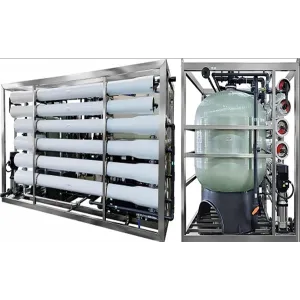
Tier III: Large-scale coastal resort estate | 100–260 guest rooms (integrated island resort; includes beach, pool complex, and dining cluster)
การจัดหมวดหมู่: Island Hotel Water Purification Solutionsเข้าชม: 31จำนวน:เวลาเผยแพร่: 2026-09-21 21:41:52Our seawater desalination systems are designed for large coastal resorts with 100–260 guest rooms, beach facilities, pool complexes, and dining clusters. We provide customized water treatment solutions based on resort size, seawater quality, daily consumption, site conditions, and operational needs, supporting reliable freshwater production for comprehensive island hospitality projects.
ข่าว
การจัดหมวดหมู่:
ไม่มีผลการค้นหา!
กรณี
การจัดหมวดหมู่:
ไม่มีผลการค้นหา!
วีดีโอ
การจัดหมวดหมู่:
ไม่มีผลการค้นหา!
ดาวน์โหลด
การจัดหมวดหมู่:
ไม่มีผลการค้นหา!
รับสมัครงาน
การจัดหมวดหมู่:
ไม่มีผลการค้นหา!
ผลิตภัณฑ์ที่แนะนำ
ไม่มีผลการค้นหา!



 โทรศัพท์