

How Algae Blooms Affect SWRO pretreatment and Membrane Performance
algal blooms are an important operational challenge for seawater reverse osmosis (SWRO) desalination plants. When algae rapidly multiply in seawater, the problem is not limited to the visible increase in algal cells. Algae can also release algal organic matter (AOM), extracellular polymeric substances (EPS), proteins, polysaccharides and, in some cases, harmful algal bloom (HAB) toxins. These materials can overload pretreatment systems, increase filter fouling and create additional fouling pressure on downstream RO membranes.
Research on SWRO systems shows that algal blooms can cause clogging and deterioration of pretreatment performance and, under severe conditions, contribute to plant shutdowns to protect RO membranes.
For SWRO operators, the key issue is therefore not simply removing algae cells. Effective bloom management requires control of algal cells, AOM, EPS, suspended solids and biological activity before the seawater reaches the RO membrane.
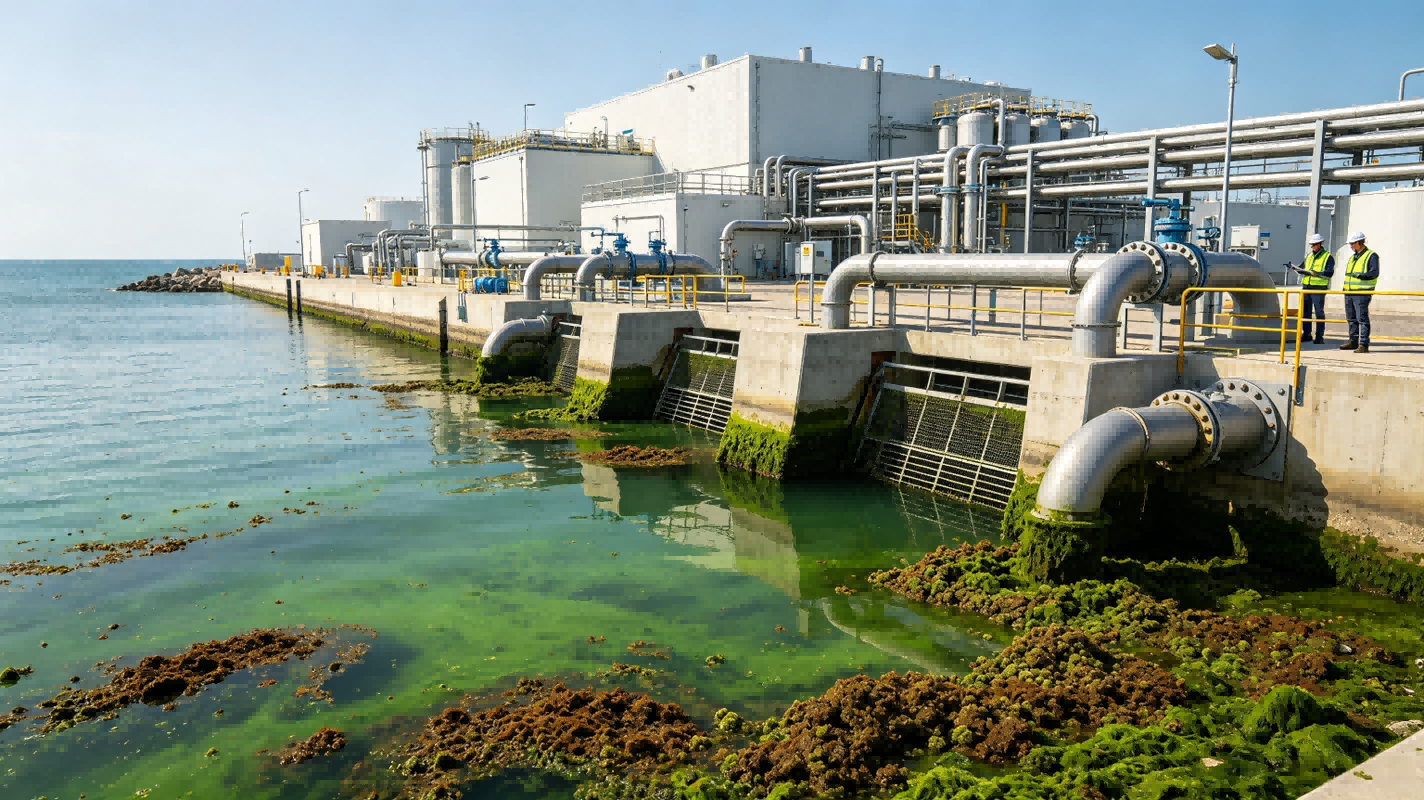
An algal bloom changes the physical and chemical characteristics of seawater entering a desalination plant. The concentration of algae varies according to species, bloom stage and environmental conditions, so the impact on pretreatment can also change rapidly.
The most obvious problem is the increase in suspended biological particles. Algal cells can accumulate on screens, filters and other pretreatment components. However, the dissolved substances released by algae may be even more challenging for downstream membrane performance.
AOM generally contains biopolymers such as polysaccharides and proteins. These compounds can remain in the water even after intact algal cells have been removed. Recent research has identified AOM as a major contributor to organic and biofouling in SWRO systems.
This creates two related treatment challenges:
Particulate loading: algae and cell debris can clog screens and filters.
Organic loading: dissolved AOM and EPS can pass through some pretreatment stages and reach the RO membrane.
Biological fouling: residual biodegradable organic matter can support microbial attachment and biofilm development.
Chemical demand: stronger or more frequent pretreatment may be required during bloom events.
Membrane performance deterioration: fouling can increase pressure requirements and reduce permeate production.
The first line of protection in an Open Seawater Intake system is normally screening. During a significant bloom, high concentrations of algae, organic debris and suspended particles can increase the solids loading on intake and primary pretreatment equipment.
Once the algae enter the treatment train, coagulation, clarification, dissolved air flotation (DAF), granular media filtration and membrane filtration may all experience higher loading.
Historical reviews of SWRO operations during HAB events have identified pretreatment clogging as one of the major operational problems associated with algal blooms.
For this reason, monitoring should begin at the seawater intake rather than waiting for the RO system to show abnormal operating data.
Coagulation and dissolved air flotation can be used to capture algae and associated organic matter before the water reaches downstream filtration.
DAF is particularly relevant when the feedwater contains large quantities of buoyant or low-density biological particles. Proper chemical dosing and flotation conditions can help separate algae and organic-rich solids from the seawater.
Research has demonstrated that DAF combined with coagulation can improve the removal of AOM during simulated algal bloom conditions. One recent study reported 72% removal of biopolymers with a dual-media filtration process preceded by coagulation and DAF under its tested conditions.
However, the appropriate process depends on the algae species, water chemistry, bloom concentration and plant configuration. There is no single pretreatment sequence that is optimal for every SWRO plant.
5
Granular media filters are widely used in seawater pretreatment, but a sudden increase in algae and organic matter can substantially increase their loading.
As algae accumulate within the filter bed, pressure loss can increase and filtration cycles may become shorter. Operators may need to adjust backwash frequency and monitor differential pressure more closely.
The challenge is also related to what happens after the algal cells are captured. Algae may rupture or release extracellular materials, adding dissolved or colloidal organic matter to the treated water.
Therefore, a filter that appears to be removing algae effectively does not necessarily mean that the downstream RO feed is free of algal-derived foulants.
Ultrafiltration (UF) and microfiltration (MF) can provide a physical barrier for algae, suspended solids and colloidal material. Membrane-based pretreatment has become an important option for SWRO applications because of its ability to provide relatively consistent feedwater quality.
However, algae-related fouling can also affect the UF/MF membranes themselves.
Research investigating marine algae found that fouling severity could vary significantly with algal species and growth phase. In particular, particulate algal organic matter contributed strongly to membrane fouling, while some species produced more severe irreversible fouling than others.
More recent research has also highlighted another consideration: cell rupture and shear can alter the AOM entering downstream treatment. A 2026 study reported that shear exposure during UF pretreatment can increase the release of AOM from algal cells, with implications for subsequent RO fouling.
This means UF operation during bloom conditions should be evaluated not only by algal cell removal but also by the quality and fouling potential of the resulting permeate.
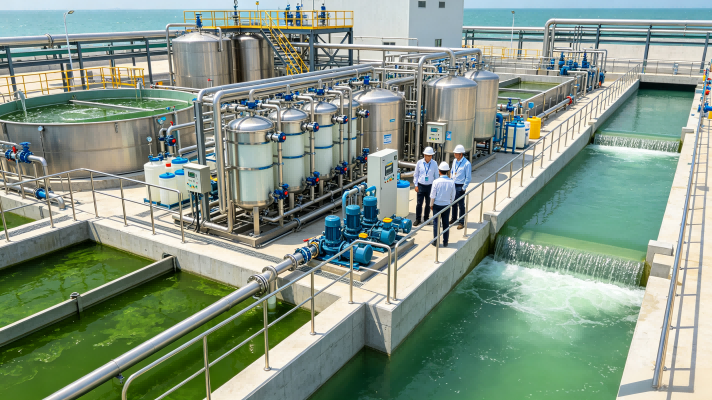
The relationship between algae and RO fouling can be summarized as:
Algal bloom → algal cells → cell disruption/release → AOM/EPS → pretreatment passage → RO membrane fouling
AOM is particularly important because some dissolved organic compounds are much more difficult to remove than intact algal cells.
A 2025 study found that AOM from a marine diatom was mainly composed of biopolymers and could cause organic fouling downstream of conventional pretreatment under simulated bloom conditions.
This explains why simply killing algae with a disinfectant does not necessarily solve the entire problem. Inactivation can reduce viable biological activity, but the organic material released by algae can remain in the water and continue to contribute to fouling.
One of the most visible consequences of fouling is a decline in normalized permeate flow.
When organic matter and biological material accumulate on the membrane surface, hydraulic resistance increases. The plant may need higher operating pressure to maintain production.
A fouled membrane requires additional pressure to produce the same amount of permeate. Over time, this can increase energy consumption.
The relationship between fouling and pressure is one of the key reasons pretreatment performance is so important in SWRO operation.
Algal organic matter can provide biodegradable material that supports microbial attachment and biofilm development.
Once a biofilm forms on the RO membrane, the problem becomes more difficult to manage. Biofilm layers can increase hydraulic resistance and contribute to declining membrane productivity and changes in salt rejection.
Algal bloom events can shorten the interval between RO clean-in-place operations.
Frequent cleaning increases chemical consumption, labor requirements and downtime. If fouling becomes irreversible, cleaning may not fully restore membrane performance.
Severe membrane fouling can affect the operating condition and performance of an RO system. Biofouling studies have associated biofilm accumulation with changes in permeate flux and salt rejection.
For operators, normalized permeate flow, differential pressure and normalized permeate conductivity/TDS are therefore useful indicators for identifying changes in membrane performance.
5
Disinfection is an important component of many seawater pretreatment systems, but chlorine management requires careful control.
Chlorination can help inactivate algae and microorganisms. Research published in 2024 comparing sodium hypochlorite and chlorine dioxide under algal bloom conditions found that both could inactivate algae and affect EPS, while chlorine dioxide showed stronger performance under the tested conditions.
However, SWRO polyamide membranes are sensitive to oxidants. Therefore, when chlorination is used upstream, adequate dechlorination is normally required before seawater reaches the RO membrane.
More importantly, disinfection should not be considered a replacement for physical removal. Dead algae and dissolved AOM can still contribute to fouling.
A practical treatment strategy is therefore based on disinfection plus physical/chemical removal, rather than relying on one treatment step.
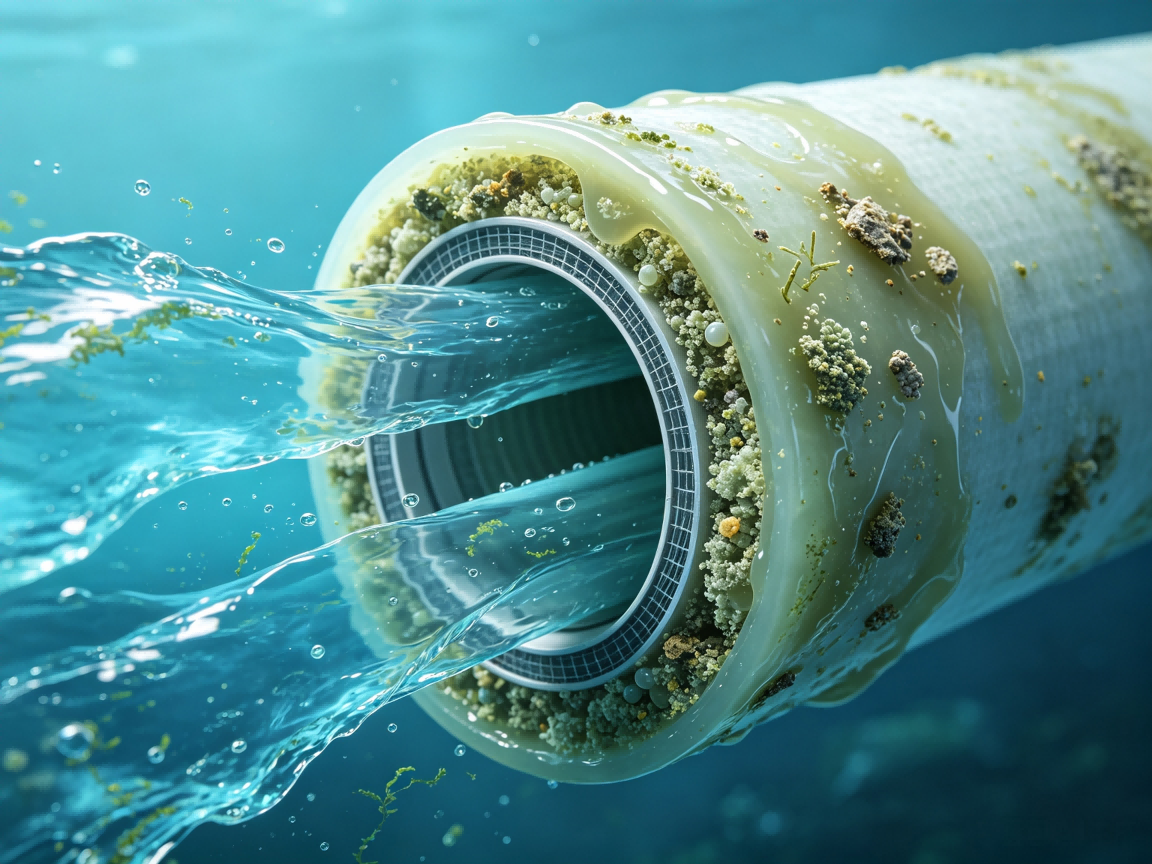
A proactive monitoring program can help operators identify changes before membrane performance deteriorates significantly.
Important parameters can include:
| Monitoring area | Parameters to consider |
|---|---|
| Raw seawater | Algal cell concentration, turbidity, temperature |
| Organic matter | DOC, AOM, biopolymers, EPS |
| Pretreatment | Differential pressure, filtration cycle, backwash frequency |
| UF/MF | Transmembrane pressure, permeability, flux decline |
| RO feed | SDI, turbidity, residual oxidant, fouling indicators |
| RO performance | Normalized permeate flow, pressure drop, salt passage |
| Chemical control | Coagulant demand, disinfectant dose, dechlorination |
Research has specifically identified algae concentration, biopolymer/TEP concentration and membrane fouling potential as useful indicators for assessing bloom severity and pretreatment performance.
There is no universal pretreatment configuration for all seawater sources. The appropriate system should reflect the intake type, seasonal water quality, algal species, bloom frequency, plant capacity and required product-water quality.
A conventional treatment train may include:
Seawater Intake → Screening → Coagulation → DAF/Sedimentation → Media Filtration → Cartridge Filtration → SWRO
For challenging seawater conditions, a membrane-based configuration may be considered:
Seawater Intake → Screening → Coagulation/DAF → UF/MF → Cartridge Filtration → SWRO
The literature indicates that integrating several pretreatment processes can improve algae and toxin removal and provide better protection for SWRO membranes.
Subsurface intakes can also offer advantages in locations where geological conditions are suitable because the surrounding sediment can provide a natural filtration barrier.
Algal blooms affect SWRO plants through more than simple filter blockage. Their main consequences can extend across the entire treatment process:
Algal cells increase the particulate loading on pretreatment equipment.
AOM and EPS can remain after algae are removed or inactivated.
Coagulation and DAF can help reduce algae and organic loading before filtration.
UF/MF can provide effective physical removal but can itself experience severe algal fouling.
RO membranes may experience organic fouling and biofouling when AOM passes through pretreatment.
Membrane fouling can reduce permeate flux and increase operating pressure.
Frequent cleaning can increase operating costs and downtime.
Online monitoring and early response are important during bloom events.
Disinfection must be coordinated with dechlorination when chlorine-sensitive RO membranes are used.
Pretreatment should be designed around actual seawater characteristics rather than relying on a fixed process configuration.
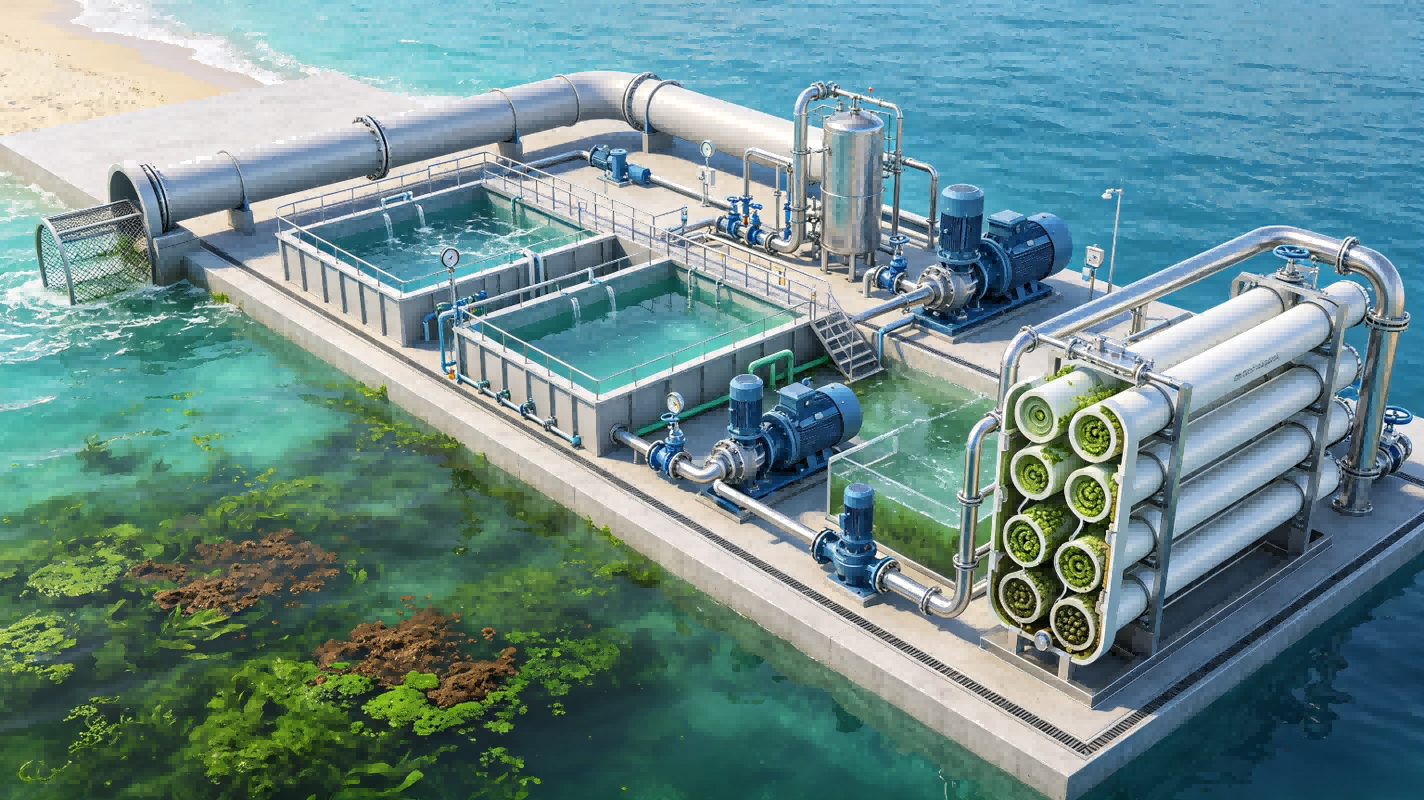
Algal blooms represent a complex pretreatment challenge for seawater reverse osmosis. The critical issue is not only the number of algae cells entering the intake but also the organic matter released during bloom development, cell decay and treatment.
For SWRO plants, effective protection of the RO membrane begins upstream. Screening, coagulation, DAF, sedimentation, media filtration, UF/MF and disinfection can each play a role, but their effectiveness depends on how they are integrated and operated under changing feedwater conditions.
Recent research continues to focus on AOM removal, membrane-based pretreatment and the effects of algal cell disruption. A monitoring-driven pretreatment strategy that tracks both algal loading and organic fouling potential can help operators respond earlier and maintain more stable SWRO performance.
For desalination projects located in areas prone to seasonal algal blooms, pretreatment should therefore be considered a core part of membrane protection rather than simply an upstream filtration step.
เว็บไซต์นี้ใช้คุกกี้เพื่อให้แน่ใจว่าคุณได้รับประสบการณ์ที่ดีที่สุดบนเว็บไซต์ของเรา
 English
 Portugues
 Pусский
 Français
 العربية
 Indonesia
 Melayu
 Tiếng Việt
 中文
中文 қазақ
қазақ עִברִית
 မြန်မာ
 ພາສາລາວ
 Filipino
 o'zbek
 Кыргызча
 тоҷикӣ
 ខ្មែរ
ខ្មែរ Türkmenler



 โทรศัพท์
ความคิดเห็น
(0)